What Taxes Does a Solo Optometrist Practice Pay? A Complete Guide
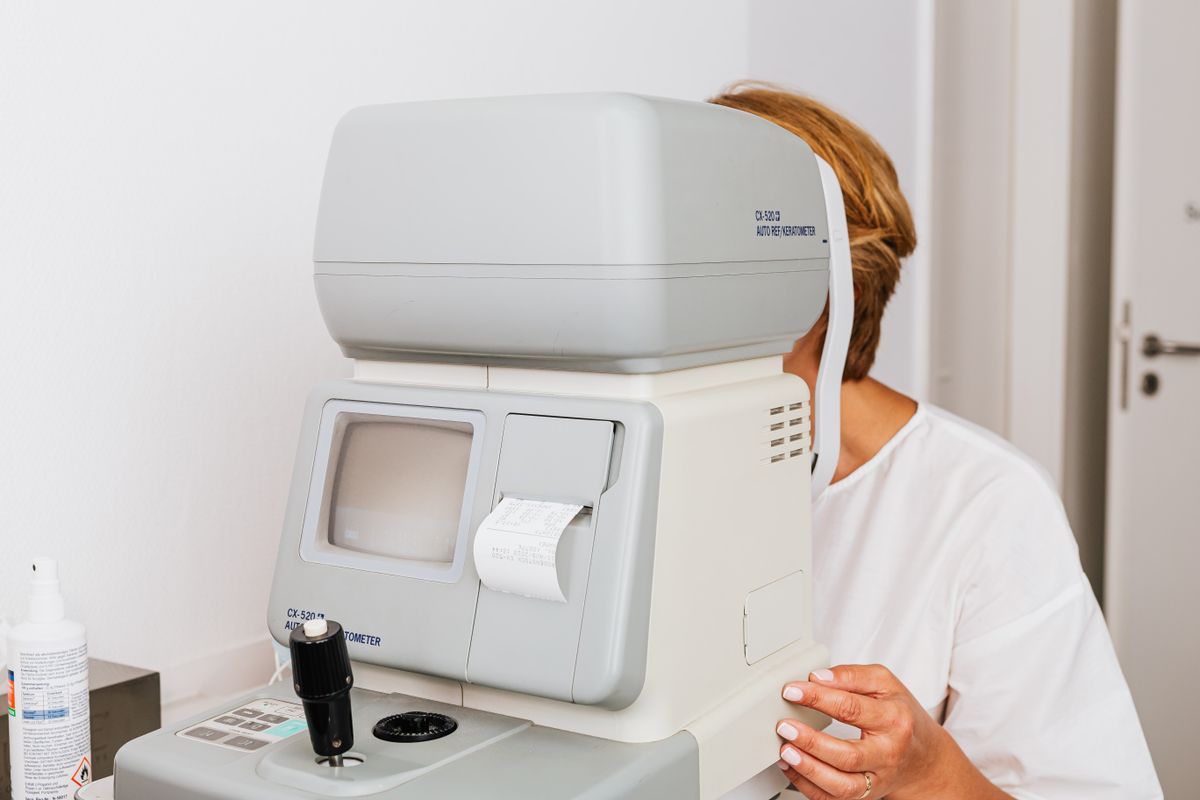
Learn the federal, state, and local taxes solo optometrists pay, including income, self-employment, payroll, and more, with practical steps to manage them.
As a solo optometrist, you wear many hats: clinician, business owner, and tax filer. The taxes you pay go beyond just income tax. You’ll also owe self-employment tax, possibly payroll tax if you have staff, and various state and local taxes. This guide breaks down each tax, what it costs, and how to handle it, so you can budget accurately and avoid surprises at filing time.
Federal Income Tax
Your practice’s net profit (revenue minus deductible expenses) flows through to your personal tax return. You pay federal income tax at marginal rates ranging from 10% to 37% for 2026. Most solo optometrists fall in the 22% to 32% bracket, depending on total income.
What to do: Estimate your annual net profit and multiply by your expected marginal rate. Set aside 25% to 35% of each paycheck for federal income tax. Use IRS Form 1040-ES for quarterly estimated payments.
Self-Employment Tax
As a sole proprietor, you pay both the employee and employer portions of Social Security and Medicare. The self-employment tax rate is 15.3% (12.4% for Social Security, 2.9% for Medicare). You can deduct the employer half (7.65%) as an adjustment to income, which lowers your AGI.
Example: If your net profit is $120,000, your self-employment tax is $18,360. You can deduct $9,180, saving you roughly $2,000 to $3,000 in income tax.
What to do: Calculate self-employment tax on Schedule SE. Include this in your quarterly estimated payments, on top of income tax.
Payroll Taxes (If You Have Employees)
If you hire staff (e.g., an optician or front desk), you must withhold federal income tax, Social Security, and Medicare from their wages. You also pay the employer share of Social Security and Medicare (7.65% of each employee’s wages) plus federal unemployment tax (FUTA), which is 6% on the first $7,000 of wages, but you get a credit for state unemployment taxes, often reducing it to 0.6%.
What to do: Register for an EIN, set up payroll processing (using a service like Gusto or ADP, costing $40-$100/month), and file Form 941 quarterly. Deposit payroll taxes via EFTPS.
State Income Tax
Most states impose a personal income tax on your practice’s net profit. Rates vary widely: states like California and New York have top rates over 10%, while states like Texas and Florida have no state income tax. Check your state’s tax agency for current rates.
What to do: Estimate your state tax liability and make quarterly estimated payments, similar to federal. Some states have different due dates, so verify with your state’s revenue department.
State and Local Sales Tax
If you sell products like eyeglasses, contact lenses, or over-the-counter solutions, you must collect sales tax. Rates vary by state and locality, typically 4% to 10%. You remit these taxes monthly or quarterly, depending on your volume.
What to do: Register for a sales tax permit, charge tax on taxable items (eye exams are usually exempt), and file returns electronically. Use accounting software like QuickBooks to track sales tax automatically.
Property Tax
If you own your practice building, you pay real property tax. If you lease, you may still pay personal property tax on equipment like phoropters and slit lamps. Rates vary by county, but expect 1% to 3% of assessed value annually.
What to do: Keep records of equipment purchases. Some states offer exemptions for medical equipment, so check with your local assessor.
Excise Taxes
You may owe federal excise tax on certain items, such as heavy vehicles or fuel. For most optometry practices, this is rare. However, if you sell certain medical devices, there is a 2.3% excise tax, but this is suspended through 2026.
What to do: Review IRS Publication 510 if you have any doubt. Most solo optometrists won’t need to file excise taxes.
Quarterly Estimated Taxes
Since you don’t have an employer withholding taxes, you must pay estimated taxes quarterly. Deadlines are typically April 15, June 15, September 15, and January 15. If you miss a payment, you may face penalties.
What to do: Use the IRS Direct Pay system to make payments. Calculate your estimated tax using Form 1040-ES, or work with a CPA to avoid underpayment penalties.
Tax Deductions Specific to Optometry
To reduce your taxable income, take advantage of deductions:
- Equipment depreciation: Section 179 allows you to deduct up to $1,220,000 (2026 limit) for equipment like autorefractors and OCT machines.
- Home office: If you have a dedicated space for administrative work, you can deduct $5 per square foot (up to 300 sq ft) using the simplified method.
- Continuing education: Deduct travel, lodging, and course fees for CE.
- Professional liability insurance: Premiums are fully deductible.
- Health insurance: Deduct premiums for yourself and your family.
- Retirement contributions: SEP IRA contributions up to 25% of net earnings (max $70,000 in 2026) reduce taxable income.
What to do: Track all business expenses in a separate account. Use accounting software to categorize deductions automatically.
FAQ
Q: Do I need to pay taxes if my practice loses money?
A: If your business has a net loss, you don’t owe income or self-employment tax, but you still need to file Schedule C to report the loss. You may be able to carry the loss forward to offset future profits.
Q: Can I deduct health insurance premiums for my family?
A: Yes, as a self-employed individual, you can deduct premiums for yourself, your spouse, and dependents, as long as you aren’t eligible for an employer-sponsored plan.
Q: What if I miss a quarterly estimated tax payment?
A: You’ll owe interest and possibly penalties. The IRS calculates penalties based on how much you underpaid and for how long. Pay as soon as possible to minimize the damage.
Q: Should I incorporate to save on taxes?
A: An S-corp can save on self-employment tax by paying yourself a reasonable salary and taking distributions, but it adds payroll complexity. For many solo optometrists, a sole proprietorship is simpler. Consult a CPA to compare costs.
The Bottom Line
Solo optometrists face a complex tax landscape: federal income tax, self-employment tax, state income tax, sales tax, and possibly payroll and property taxes. The key is to plan ahead: set aside 30% to 40% of your income for taxes, make quarterly estimated payments, and track deductions diligently. Work with a CPA who understands medical practices to ensure you’re not overpaying. Start this week by reviewing your last year’s tax return, estimating your current liability, and adjusting your withholding or estimated payments accordingly.